
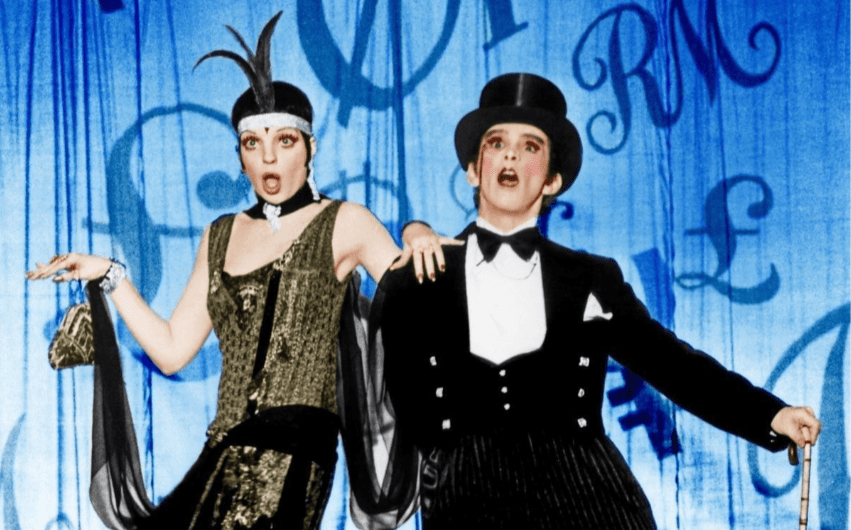
The unprecedented overlap between the recent Russo-Ukrainian war and the harrowingly similar story of “Cabaret” is likely something no theatre-goer thought they would ever live through — but, here we are. Ukraine’s brilliant Illia Choporov wakes each morning to perform “Cabaret’s” Emcee, and as a recent addition to the tremendous lineup of Emcees in the musical’s history — Grey, Cumming, Park and Redmayne, to name a few — Choporov harnesses exactly what the role demands: an acute talent to weave reverie through a story of woe. Each actor exudes his own originality in interpreting the character, but none of these actors have lived what they live onstage offstage. For Choporov and fellow native cast members, the task of “Cabaret’s” exegesis in the current climate of their homeland is ironic to the extent of dystopia but simultaneously a vital endeavor in propagating the story of their nation. Ukrainian audiences need this art more than ever, but the recent cabaret-mania that has gripped American youths seems to unconsciously disregard the underlying conflict that is woven through its story in the first place. While Americans grieve that they may never see a day where the Ukrainian cast takes its irresistible production overseas, Ukrainians grieve that they may never see a day where Russian occupancy is at its end.
For those who are alien to its story, “Cabaret” intertwines the dissipation of two romances with the dissipation of Berlin’s societal composure after World War I, particularly during Germany’s intermittent Weimar Republic and the consequent rise of Nazism as equally virulent institutions. The exotic splendor of the Kit Kat Club and its performing ensemble serve to mesmerize the troubled Berlin audience with feathers and fuss, but cunningly demands this: “Leave your troubles outside! So, life is disappointing? Err? Forget it! We have no troubles here! Here, life is beautiful. The girls are beautiful. Even the orchestra is beautiful!”
Choporov’s character, the Master of Ceremonies, remains a dual-ended representation of society. Woven through his resonant vocal ballads are persistent subliminal messages in an array of realistic warnings: sex, greed, inaction, antisemitism and the imminence of fascism, which his fellow ensemble ignores. His defining look, clownesque makeup and promiscuous fashion, mirrors the distressing politics outside the cabaret’s doors, but eerily enhances his criticality as an entertainer — he is an unlikely beacon of truth. While Berlin trifles with catastrophe, the morally grey Emcee reminds onlookers of what remains outside its doors. Despite his bipolar mentality for the musical’s duration, each production — Ukrainian and American alike — ends virtually the same way: Conformity and the tragic loss of vibrancy at the hands of evil.
Sound familiar?
Overseas, American teens and young art enthusiasts are latching onto Choporov’s riveting performance, creating fan pages, sketching stills, cosplaying and praising the cast’s beautiful interpretation, all of which have been received with boundless love by the cast themselves. The idea that each new fan is consciously empathetic towards suffering Ukrainians is very plausible, but the evidence to corroborate this remains stretched thin — nobody’s talking about it. Realism in the arts is one of the most critical ways that younger generations become informed about the happenings of the world. Hardly any teens pay attention to news broadcasts on their own time, but put it in a musical — they can’t take their eyes off it. In 2022, when the Russo-Ukrainian war was big news, they paid attention. However, due to more recent events and the unpredictability of media focus, the conflict that still rocks Ukraine’s foundation has been placed on the back burner. The Kyiv cast of “Cabaret” is slowly yet studiously reviving awareness of the subject by weaving a universal language — music — amongst the crippling realities of their everyday lives. Its fans continue to channel their adoration and make the country’s cause feel heard in numerous positive lights, but a few calculated moves by the congregation might propel a larger force of change than this general splendor has. For now, simply being heard is more than enough, and Choporov continues to challenge unassuming art enjoyers with his elucidation of “Cabaret’s” Emcee as it surpasses the title of just a musical via transformative relevance.




 UF PRISM