
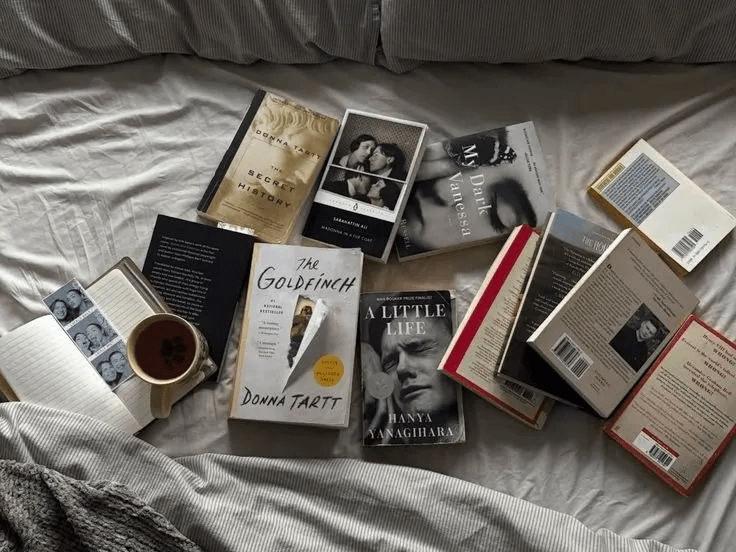
On the pressure of how authors are being forced to promote their books
Authors ask themselves the same question before they’ve even finished their first draft: How will I market my book so that it sells?
It’s a superficial question all around, thinking about the money to be made when the story hasn’t even been pieced together, but it’s nevertheless necessary to be asked. Regardless of how much an author may love the novel they poured their heart into, money is what supports them on a financial level. No market = no money = no more books.
A decade ago, authors pitched up their stands farmer-market style in conventions and book stores, attracting the curious reader or two every so often. Now, it’s an entirely different game. It’s a game of uploading continuous content to social media, and praying for a community to be built that is large enough to market to the time your novel publishes.
But the book community online has warped to fit unrealistic standards and encourage even worse content, what with the rapid rise of BookTok and an endless stream of writers looking to create a quick buck.
Even so, authors are determined to find their right audience online and give their characters the story they deserve.
Why are authors being forced to promote their books a certain way?
There’s no denying the presence of BookTok and Bookstagram, and their overwhelming effect on modern published literature. It’s an earthquake-level effect that has ruptured cracks in an otherwise peaceful town (p.s. How are my Stranger Things fans?).
I think I’ve figured out why, and the reason is simpler than one might think. The entire thing creates a cause-and-effect chain that starts perhaps where most started once: Wattpad (or Tumblr or AO3, pick your poison).
Reading was an escape for virtually any individual looking to forget about their world for a bit. Wattpad, among other platforms, naturally became an accessible way for both curious readers and nervous writers to delve deeper into a world that offers what theirs lacked.
We’re all familiar with Y/N stories, the Y/N standing for “Your Name.” These were essentially self-insert stories where the reader could imagine themselves as the main character, more often than not from a female point of view. These types of stories followed common tropes like enemies to lovers, forbidden romance, fake relationships, grumpy and sunshine, the love triangle, and so on.
Romance was something that every reader wanted; it was pretty much a given. I mean, what’s not appealing about finding your perfect someone in a world where everyone seems to be so… well, not perfect?
The community that Wattpad (and other platforms) mothered was fairly niche until about the late 2010s, which is when TikTok exploded. With the platform’s rise, readers and writers alike became more vocal about their interests, hoping to find a community that welcomed them and where they could express their interests without shame.
Which is when — you guessed it — BookTok was born. At first, it was a cozy place on the internet to discover new books, and not just those in the romance genre, but also those that belonged to genres like sci-fi, dystopian and classic literature, from renowned authors like Brandon Sanderson, Stephen King and Oscar Wilde.
Though it was inevitable in hindsight that romance would take over (it’s now the highest-selling book genre for a reason). Being everyone’s focus, it developed into a space that only attracted a specific audience, the kind that was only looking for a specific trope or two, namely the more exciting ones like enemies to lovers — the more… taboo-esque tropes, shall we say.
Readers were no longer looking to read about someone else or a character’s journey. They wanted to insert themselves into the story, to be part of a different world that wanted them just as badly as they wanted it.
As a result, readers are only looking for the same thing over and over again. Naturally, if a book doesn’t promise that one thing, why would they waste their time reading it? Why would they waste time even with the first few pages? Especially considering there are books out there whose plots can be summarized within a single trope, advertised so boldly in an author’s Instagram bio?
Enter the commercialization of books.
Authors have to spoil their books in order to get people to read them.
Now that we’ve delved into the why of things, let’s move on to the how. So, readers are only looking for a specific thing in books: romance with a touch of taboo — that’s what we’ve established so far.
Is this sounding familiar? It should, because that’s the definition of dark romance.
Dark romance is a subgenre of romance that focuses on the growing romantic relationship between two or more characters involving darker/more taboo topics or activities (definition coined by me). I won’t delve into specifics, partly because it can get pretty extreme, and partly because it doesn’t matter.
At the issue’s core, it’s about indulging in a guilty pleasure, taking a dip into what’s not allowed.
Once we taste its luxury — giving us the ability to enjoy privately and therefore now guilt-free — it quickly becomes an addiction. One that we’ll crave solely for the hit that it’ll provide us.
I’m making this all sound very dramatic, I realize, but it’s largely like sugar. The more we grow attached to its taste, the more we crave it, and only it, even if it’s something that’s common and can be found everywhere.
As a result, new authors who want readers and want their books to sell must advertise the most exciting parts of their book to give something similar to a promise to their audience that they’re going to be reading a book that will satisfy them. The most popular examples include short-form videos on social media with a picture of an excerpt of a book, spoiling an important plot point, or videos captioned with the classic “If you like this trope, then you’ll love my book!”
This sprouts a similar pattern among novels: either a magical or forbidden world that focuses attention on the relationship between (usually) two characters. Think A” Court of Thorns and Roses,” “Shatter Me,” etc., in terms of romantasy (romantic fantasy), and books by authors like Rina Kent and Penelope Douglas for those much more taboo worlds.
Regardless of whether you consider this type of writing good or bad, it’s what sells — it’s what the people want. They want books that can be summed up into a phrase or two (“enemies to lovers,” “one-bed trope,” etc.) so that they don’t think they’ll be wasting their time.
It’s all about that dopamine hit, right?
What about the “good” authors?
In my opinion, any good writer has two aspirations: to have readers connect with their characters and story, and publish a book readers love enough to buy.
But in order to reach that perfect audience that truly will support and love your work, good authors have to trudge through this bigger audience of people that are bad readers (what we’ve discussed previously) and bad writers, aka authors looking to profit off this predictable, BookTok-ish pattern and make a quick buck through poorly written novels.
Many are pressured, and sometimes find no other way but to advertise their books like the rest of these authors. Personally, I think summing up an entire plot into a phrase is very crude and disrespectful to the story that the author’s writing, but it’s what sells, right? There’s an influx of “lazy” readers; they don’t want the burden of reading through the buildup of a well-written plot. I mean, that’s the fun of it to a good reader, but for a reader that only wants and is looking for something specific, it’s boring to riff through books all day looking for that hit.
So, my deduction is that even the good authors are being forced to promote their books this way to find their audience hiding between the cracks.
What I think is sad about it is that they lose the suspense because they reveal all the tension, summed up into a too simple phrase. It’s not an objectively good or professional way to advertise your book, but it’s what people flock to the easiest, you know?
But there remains hope!
BookTok reached its peak, I want to say, a year or two back, where it was being heavily influenced and doing the heavy influencing, when people were obsessed with bringing to light more controversial books, saying that readers should read what they want.
I think that it’s still in its peak, but it’s now become the subject of attention, where the attention is now not just from people who are obsessed with the type of books BookTok promotes, but also from people who recognize that it’s not all good and are speaking up about it. For example, a lot of bookish influencers are now talking about how BookTok is becoming something else and not what it was originally, before it got overtaken by a specific audience that only likes it for things like how “spicy” the novels are.
I think readers and other kinds of book influencers are now understanding what makes a good book and what makes a bad book, versus what makes a boring and entertaining book. There are a lot of entertaining, but bad books, which is another problem: people aren’t able to recognize that specific type of book. However, they’re the only type of novels that are most promising to become financially successful, which I think is the root issue of this whole crisis of marketing your novel.
As the community becomes a bit more divided (in a good way), I’m hoping BookTok will become a place where people are both comfortable to indulge in what they want but also are able to recognize the sometimes addictive aspect of it.
Overall, my final hope is that the online reading community will settle back into an equilibrium of all types of readers and writers, even if it still might fluctuate from time to time.
 UF PRISM