
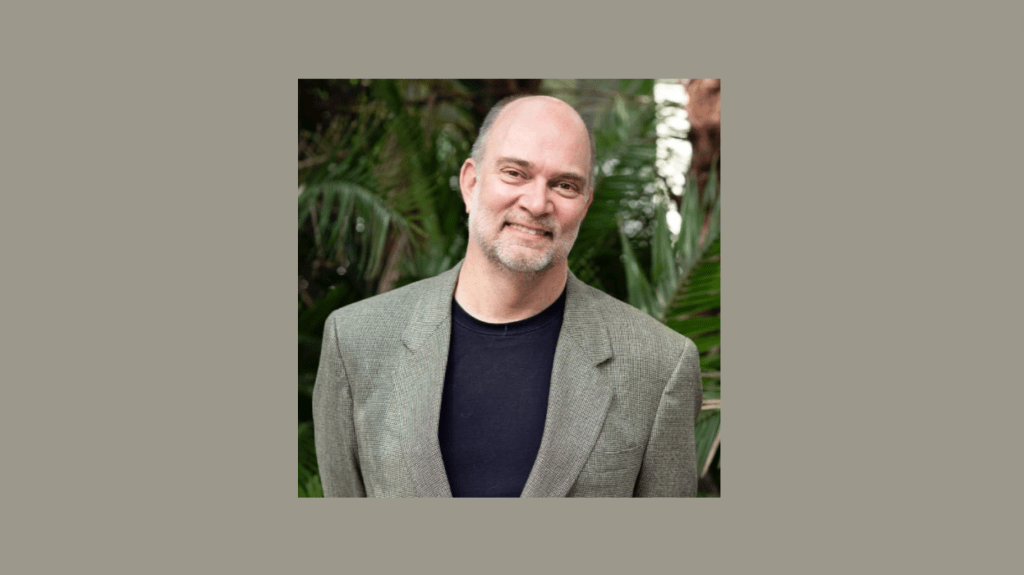
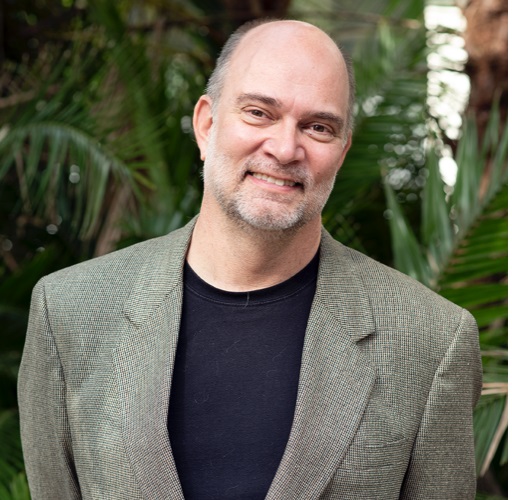
A couple of weeks ago, I met with Gregg Henderschiedt, our new second pre-health coordinator and advisor to discuss his background and what he most enjoys about working with Honors students. Our interview is as follows and has been edited for conciseness and clarity. If you have any further questions, Gregg can be reached via email at greggh@honors.ufl.edu. Thank you so much to Gregg for his time in this interview and service with the Honors Program!
Petlev: Can you tell us a little bit about yourself? What’s your background?
Gregg: I am from Minnesota– which occasionally you can pick up from the accent if you’re good at those things– and I was a non-traditional student. I got my bachelor’s when I was 31 and I got my master’s when I was 33. My background is in mental health counseling and I had every intention of being pretty much a therapist, like a licensed counselor.
In my first couple of years outside of grad school I was a substance abuse therapist at a drug treatment center, and I did that for a number of years which was very interesting and intense work. I liked it, but the place was about to close so I took a temporary job back at the university where I had gone to school in their counseling center. I did all of the eating disorders, substance abuse, relationship issues, career counseling, depression, and all the kinds of basic mental health stuff.
Then a position opened up, a permanent position, in academic advising– but it was academic advising for high-risk students who had a– you know, this is not something that is still common at UF but a lot of other schools have freshman retention programs– because we had about 30 to 40 percent of our freshmen who didn’t make it through the first year.
I also worked with first-generation students, students with a lot of challenges, so it was academic advising but it wasn’t just talking about classes. It was like “How are you adjusting to school?” We had access to their grades so we could see how they did on their first test; if they didn’t do well we could call them in and talk about what kept them from getting the grades that they would like to have gotten. It wasn’t that they didn’t understand it, it was much more hands-on to make sure that the transition was smooth. We were also doing screenings for mental health– we were screening for wellness. And there was a lot of emphasis on career decision-making and career counseling.
Then I got a job at the Career Connections Center here at UF in 2007, and I was a career counselor there for six years. I did a lot of stuff with grad school and a lot of stuff with international students. I did tons of stuff with Preview, the first-year planning, the freshman, the freshman parents, career exploration, and major exploration.
Then I started working for a graduate program in the College of Agriculture and Life Sciences here in Family, Youth, and Community Sciences. A lot of the students there were interested in counseling, social work, and nonprofit stuff. I did graduate advising in program administration, but I also taught career development stuff to undergrads.
I really kind of became professionally known as a career counselor, which is interesting– side note, I saved all of my textbooks from my masters program, except my career counseling textbook, because I thought there was no way on earth I was ever going to be a career counselor. I thought it was so boring… and it’s because I didn’t understand it. Once I understood that career counseling was very interesting, it wasn’t just resumes– although I certainly can do lots of that too– I realized this is about decision-making, what’s important to you, and what’s important in life, and then I began to enjoy it more.
Then I went and worked in pre-pharmacy. I did work in admissions recruiting at the School of Pharmacy at UF. I was really into pre-health and I would spend all day talking to prospective students who were undergraduates who were interested in pre-health and pharmacy.
Petlev: Why did you choose to come work in the Honors Program?
Gregg: When this job came open, it just felt like it’s the advising, it’s the career stuff, it’s the pre-health stuff. So it’s come together, right? The areas I’m going to focus on, obviously, are pre-health. So I always say I’m going to be Meredith 2.0. She says, “No, you’re Gregg 2.1, right?”
I’m interested in really helping increase the number of students we can help with pre-health because we have so many students in Honors who are pre-health of some kind, but I’m also really hoping to help students just generally with career coaching. I’m also going to try to do a little bit of programming centered on school-life balance and stress management. I want to pull from some of that wellness background I have, investigating that tension between how you strive to be the best you can be while giving yourself some grace. I’m hoping to do some workshops centered around general wellness for all Honors students.
Working here felt like a good combination of my skill set but I was also really interested in working with motivated students and being able to help everyone get to their next level, whatever that is.
I’ve always said, “I’m in the futures business.”
I just thought it would be a fun population to work with as they go on to graduate school, as they go on to professions, as they go on to wherever, really helping them reach the stars or whatever it is, wherever their next space is.
Petlev: So what’s your favorite part about working in the Honors Program?
Gregg: I think the Honors Program values creativity with the faculty here. Even when I’ve just started throwing around ideas about potential classes I might want to teach here, the staff is like, “Yeah, that would be great.” There isn’t anybody saying, “Don’t do this, don’t do that.” If I’m passionate about something and they think it would be helpful to students, students would like it, they say go ahead and try it. I just appreciate that it’s a creative environment where they encourage the faculty to think outside the box and they want us to try new things. I’m very excited about that. Lots of possibilities.
I also think students are encouraged to step up and collaborate. I’m co-teaching a class with a student next spring that’s supposed to be about empathy for health care in healing and the role of the health care provider. I think it would be interesting to see that applied in a science setting with my counseling background.
Petlev: What excites you most about your new position as pre-health coordinator and advisor?
Gregg: I think that there are a lot of students who are driven to pre-health for several reasons, and I think being able to dig into the why with students– because students have a broad sense of why– and helping them develop a more nuanced why, and delve into their why and how their why will probably change over the four years that they’re an undergraduate and that’s fine.
People usually have a very linear sense of pre-health, so they’ll say, “Oh, I want to be a doctor.” Okay, well, doctor is this broad category. Or they might find out that they are interested in something like pharmacy, or physical therapy, or there’s a subset of being an MD that they didn’t know was a thing, but they discover it while they’re here, and so they’re broadening that search. I think that is exciting because, to be honest, a lot of times students have a sliver of knowledge about what being pre-health looks like, and I look forward to watching that open up for a student and helping them understand the possibilities.
Petlev: Is there anything else you’d like to add?
Gregg: Oh gosh. I talk a lot, so there’s always something to add.
I’m going to be working with the Jewish student affinity group and the out-of-state student affinity group, and so I’m excited to see those groups flourish and have the students get to know each other. It’s a springboard for more connection and interaction with people who share a commonality, so I think it’s going to be fun. That was one of the first things that they said when I was hired, “Would you like some affinity groups?” And I said, “Sure, I’ll try a couple. Why not?”
Headshot Courtesy of Gregg Henderschiedt


 UF PRISM